Quick Answer: For an urgent tooth extraction in Harrisburg, PA, call a dentist right away, describe the pain and any swelling, and ask for a same-day emergency appointment. Nova Dental, at 717-745-2600, lists same-day emergency appointments, and tooth extractions are among its emergency treatments. Spreading swelling, fever, or trouble breathing calls for the emergency room.
The crack happened somewhere between the driveway and the highway: a back molar, split below the gum line, with a sharp edge that kept finding the tongue. By the time the exit sign appeared, a dull ache had turned into a hot, steady throb. Searching for “urgent tooth extraction near me” at that hour is stressful, since nobody wants to guess the next step. A clear order of events makes it easier, so here is one.
Step One: Call Before Anything Else
A phone call comes before any home fix. Describe what happened, how strong the pain is, and if swelling or fever has started. We offer same-day emergency dentistry appointments, and when a patient calls, we can say what to do on the way. Asking for the earliest opening is perfectly fine. Pain that lasts more than 24 hours is a good reason to call, and so is a tooth that is loose, cracked, or knocked out.
Which Problems Lead to an Urgent Extraction?
Pulling a tooth is not the first choice, and our approach to tooth extraction is to preserve natural teeth whenever possible. Still, a few situations call for removal:
- Decay: A cavity so deep that the tooth can no longer be restored.
- Trauma: A fall, sports hit, or accident that leaves a tooth broken beyond repair.
- Infection: A tooth that is causing an abscess or spreading infection.
- Gum disease: Advanced periodontal disease that has loosened the tooth.
- Wisdom teeth: Impacted or troublesome wisdom teeth that cause pain or complications.
Only an exam and X-rays can show which of these applies.
What to Do Until the Appointment
A few careful steps ease the wait. Rinse with warm salt water, take an over-the-counter pain reliever as directed, and avoid chewing on the sore side. Hold a cold compress against the cheek for swelling. If a tooth was knocked out, handle it by the crown, not the root, rinse it gently, and try placing it back in the socket. If that fails, keep it in milk and call right away. Save any broken pieces, too. Aspirin should never be placed on the gum, since it can burn the tissue.
What Happens at the Visit
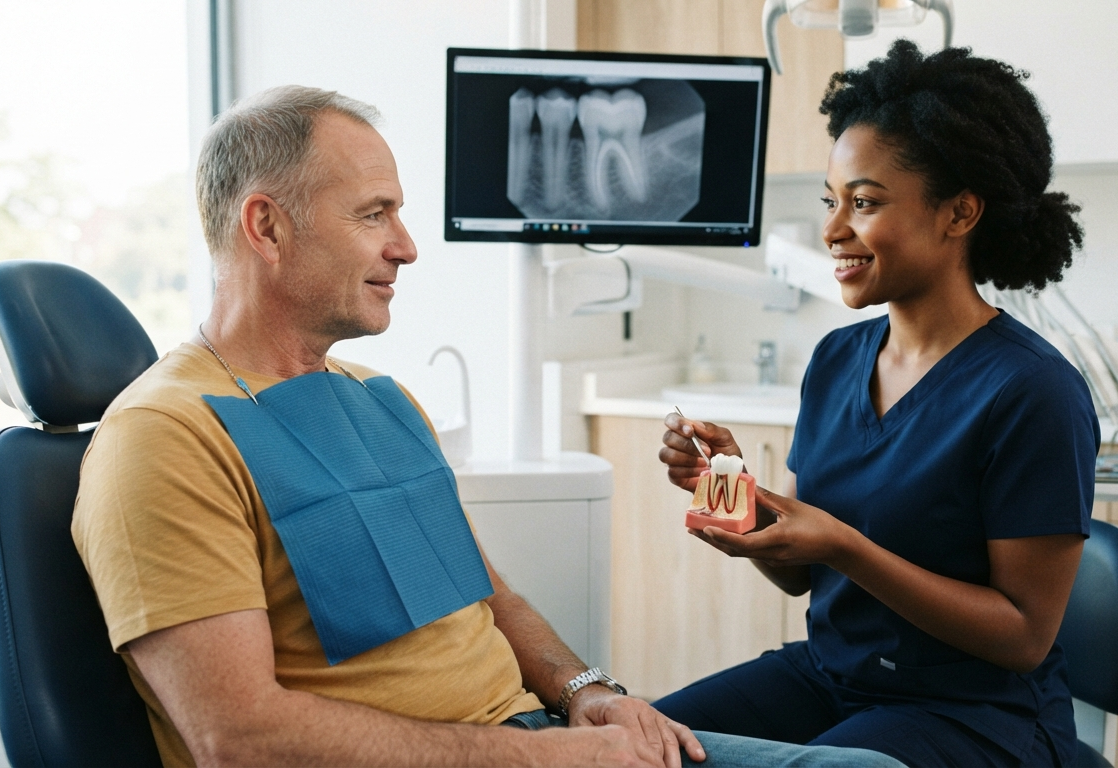
Our emergency visit starts with a focused consultation to assess the problem and manage discomfort. An exam follows to find the cause, such as an infected tooth, a cracked crown, or trauma. If the tooth can be saved, the dentist explains how. If it cannot, we discuss extraction and the reasons for it. Local anesthesia keeps the area numb, and our approach uses minimally invasive techniques to support healing. A recovery plan covers pain management, home care, and any follow-up.
Simple or Surgical Extraction?
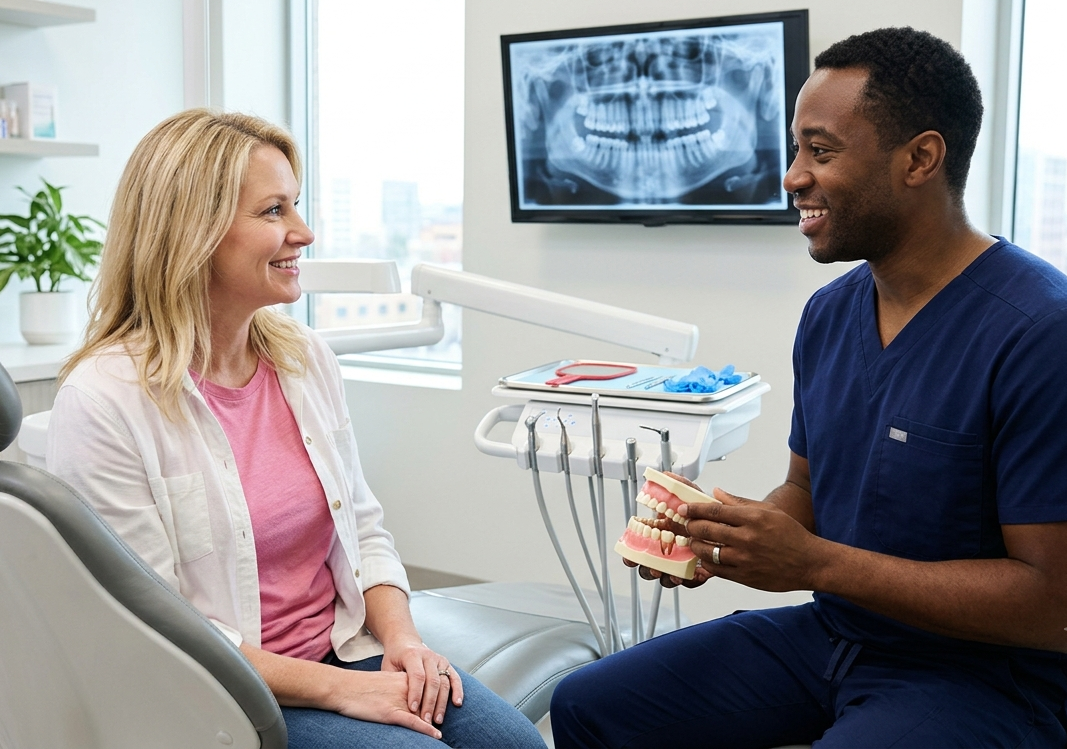
A simple extraction is used when the tooth is visible and easy to reach. A surgical extraction involves a small incision, and sometimes the removal of surrounding bone, for teeth that are impacted or broken below the gums. Both are done with the patient numbed. Extractions fall under oral surgery, which also includes bone and gum grafting. The exam decides which type fits, and the dentist explains it before anything begins.
Healing After the Extraction
The American Dental Association’s guide to extractions explains that the socket heals through a blood clot, and that some light bleeding is normal. Protecting that clot is the main job. For the first few days, rinse gently, do not smoke, and skip the straw for 24 hours. Apply a cold cloth for swelling, and call the dentist right away if swelling grows. Brush and floss the other teeth as usual, but leave the teeth next to the site alone. We give personalized aftercare instructions at the visit, and a call to our office is welcome if anything seems off.
Replacing a Missing Tooth Later
A gap can change how the bite works and how nearby teeth sit. Our dental implants are one permanent way to replace a missing tooth, and bone grafting can prepare the jaw when needed. Crowns and bridges are another route. Replacement does not have to be decided on the day of the extraction, but raising the question early helps the dentist plan the healing.
Paying for an Urgent Extraction
Unplanned care brings up cost questions fast. Nova Dental accepts most major dental insurance plans, and coverage varies, so having the card ready during the call helps. Financing and flexible payment options are available, and a membership plan is offered for patients without insurance. Asking about costs during the first call keeps surprises small.
When the Emergency Room Comes First
Some symptoms are bigger than a toothache. Swelling that is spreading across the face or neck, a fever with a swollen face, heavy bleeding that will not stop, or any trouble breathing or swallowing means calling 911 or going to the nearest emergency room first. Contact us afterward, and we will help with the dental follow-up.
At Nova Dental
At Nova Dental, patients looking for a dentist in Harrisburg, PA can call, describe the problem, and get a clear next step from our team. We also welcome patients from Progress, Colonial Park, Paxtang, Linglestown, Paxtonia, Penbrook, and Lawnton. Anyone who feels anxious about an extraction can say so, and we will explain each step before it starts.
Get Seen Without the Guesswork
Tooth pain that cannot wait? Book an urgent visit online, or call 717-745-2600 to describe the problem and ask for the earliest opening.
Frequently Asked Questions
1. How soon can a tooth be extracted?
We offer same-day emergency appointments. After a quick exam, we recommend the safest timing for the tooth.
2. Does an urgent extraction hurt?
Local anesthesia numbs the area, so the procedure itself should be comfortable. Some soreness afterward is common, and we share a pain management plan at the visit.
3. Can the tooth be saved instead?
Sometimes, yes. We aim to preserve natural teeth, and extraction is used when a tooth is too damaged or infected to restore.
4. What should be avoided after an extraction?
Smoking, rinsing vigorously, and drinking through a straw for the first 24 hours. These can disturb the clot that protects the socket.
5. Does insurance cover urgent extractions?
Coverage varies by plan. We accept most major dental insurance plans, so call 717-745-2600 with the plan details and our team can explain.