Quick Answer: When a tooth keeps aching, the right clinic is one that explains who will do the root canal, treats repeat problems as well as first-time infections, and plans the crown afterward. Nova Dental in Harrisburg, PA offers root canal therapy, retreatment, and apicoectomy, and a call to 717-745-2600 can confirm which provider would treat the tooth.
Everything was fine until a cup of iced tea, which sent a bolt of pain through the left jaw and then left a dull ache behind. By evening the tooth hurt when biting, and the gum next to it looked puffy. A late-night search for a “root canal specialist near me” produced a wall of stars and the word “best.” Ratings say little about how treatment actually goes, though. A few plain facts about who does root canals and what a good clinic offers say far more.
General Dentist or Endodontist?
The American Dental Association’s overview of root canals notes that a regular dentist may perform the treatment, or a patient may be referred to an endodontist, a dentist who focuses on the pulp and tissues inside the tooth. Neither route is wrong. A straightforward case is often handled in a general office, and a complicated one may call for added expertise. The useful move is asking, before booking, who will do the work and when a referral would make sense.
Signs a Tooth May Need Attention
Pain is the loudest clue, but it is not the only one. Common signs include:
- Pain: Persistent toothache, or pain when chewing or biting.
- Sensitivity: Lingering reactions to hot or cold after the drink is gone.
- Gums: Swelling, tenderness, or a pimple-like bump near the tooth.
- Color: A tooth that is turning darker than its neighbors.
Pain that suddenly stops does not always mean healing, since an infected nerve can go quiet. Only an exam with digital X-rays can show what is happening inside the tooth.
What a Root Canal Provider Should Offer
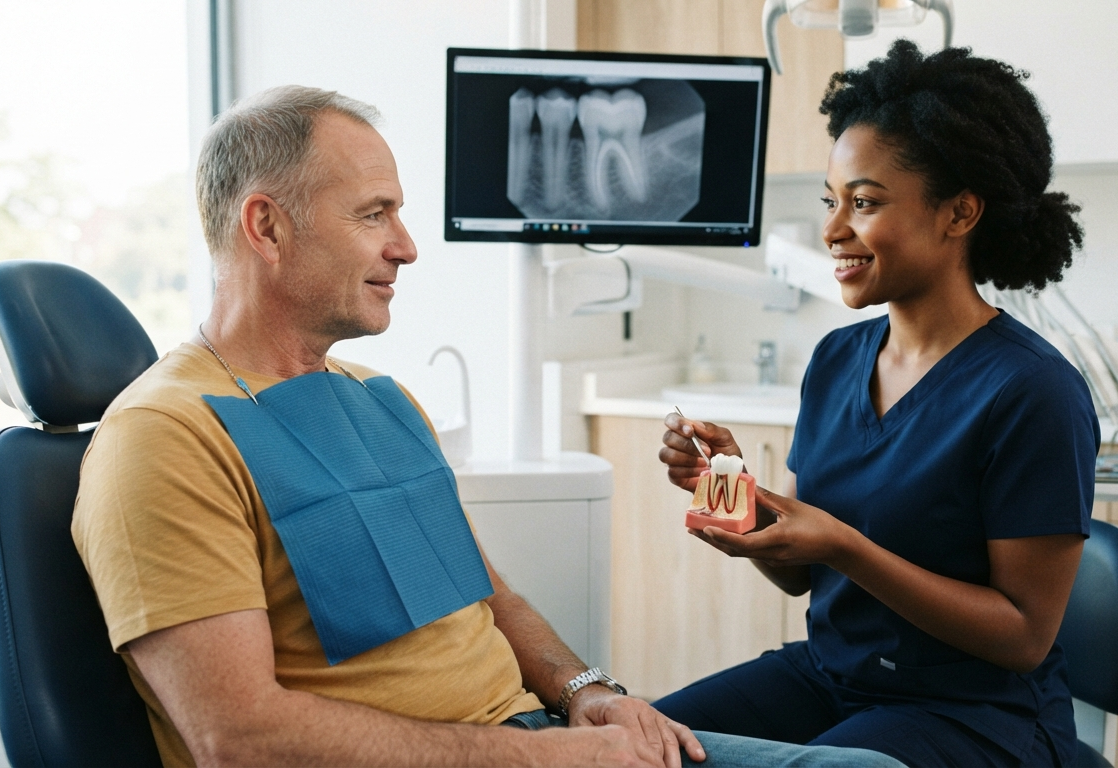
A strong clinic covers the whole picture. At Nova Dental, we start with a clinical exam and digital X-rays, then explain a personalized treatment plan before anything begins. Local anesthesia numbs the tooth, and we describe each stage as it happens. Our endodontic care also includes root canal retreatment for a tooth that has been treated before and still has trouble, and an apicoectomy, a small surgical procedure that removes infection at the root tip when a standard root canal is not enough. Having these options in one place saves patients from starting over elsewhere.
Can a Treated Tooth Hurt Again?
Sometimes, yes. A tooth that had a root canal years ago can develop a new infection, especially if a crack or new decay lets bacteria back in. Retreatment cleans the canals again and seals them. When that is not enough, an apicoectomy may be the next step. Patients with a returning ache should not assume the tooth is lost, because there are often ways to save it.
How the Treatment Goes
The ADA explains that the dentist numbs the area, places a protective sheet over the tooth, opens it, removes the infected pulp, cleans the canals, and seals them. The procedure usually takes one or two visits. Our team shares each step in plain language, and we encourage patients to say so if anything feels uncomfortable. The aim is to save the natural tooth instead of removing it, since keeping the tooth is usually better for chewing and for the neighboring teeth.
Is a Root Canal Painful?
The treatment itself is done with local anesthesia, much like having a cavity filled, so the area should be numb. The ADA notes that pain felt before treatment should fade once the infection is cleared. Some tenderness for a few days is normal, and most patients return to regular activities within a day or two. A call to our office is the right move if pain grows or the bite feels uneven afterward.
The Crown and Recovery
A tooth that has had a root canal can be more fragile afterward. In many cases we recommend a custom crown to strengthen it for the long term. While healing, patients should eat soft foods, avoid chewing on the treated tooth until it is fully restored, and brush and floss gently around it. The ADA adds that, with good care, a restored tooth can last a lifetime.
When Tooth Pain Cannot Wait
Severe pain, swelling, or a bump on the gum deserves a prompt call, since waiting usually makes treatment more involved. We offer same-day emergency dentistry appointments for urgent problems. If there is swelling that is spreading across the face or neck, a fever with a swollen face, or any trouble breathing or swallowing, call 911 or go to the nearest emergency room first.
Planning for Cost and Insurance
Cost questions are easier to settle before the visit. Nova Dental accepts most major dental insurance plans, and coverage for root canals and crowns varies, so having the card ready during the call helps. Financing and flexible payment options are available, and a membership plan is offered for patients without insurance. A written treatment plan that lists every step, including the crown, makes comparing clinics much easier.
At Nova Dental
At Nova Dental, patients looking for a dentist in Harrisburg, PA can describe the pain to our team and get a clear next step. We also welcome patients from Progress, Colonial Park, Paxtang, Linglestown, Paxtonia, Penbrook, and Lawnton. Patients who feel nervous about a root canal can tell us, and we will walk through the process before it begins.
Ask About a Root Canal Visit
Tooth pain that will not quiet down? Schedule an exam online, or call 717-745-2600 to ask who would treat the tooth and what the first visit involves.
Frequently Asked Questions
1. How can a root canal clinic be chosen?
Look for one that explains who performs the treatment, offers retreatment, and plans the crown that protects the tooth afterward. Our team is glad to answer these questions before a visit is booked.
2. Does Nova Dental offer root canal retreatment?
Yes. Our endodontic care includes retreatment for teeth that have had a root canal and still cause trouble, plus an apicoectomy when needed. The exam and X-rays show which option fits.
3. Is a root canal painful?
Local anesthesia numbs the tooth, so the procedure should be comfortable. Mild tenderness for a few days afterward is common, and we explain how to manage it before patients leave.
4. Does a root canal need a crown?
In many cases, yes, since a treated tooth can be more fragile. We recommend a custom crown when it helps protect the tooth, and the dentist explains why after the exam.
5. Does insurance cover root canal treatment?
Coverage varies by plan. We accept most major dental insurance plans, so call 717-745-2600 with the plan details and our team can explain how benefits may apply to the root canal and crown.